
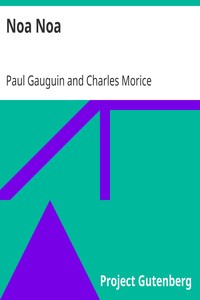
Noa Noa by Paul Gauguin and Charles Morice
Let's be clear: this isn't a straightforward novel. It's a hybrid—part memoir, part artistic manifesto, filtered through a poet's lens.
The Story
Paul Gauguin, a frustrated painter in 1890s Paris, sells his belongings and sails to Tahiti. He’s searching for a pure, untouched world to inspire his art. The book follows his first years there. He describes the stunning landscapes, the vibrant culture of the Tahitian people, and his attempt to shed his European identity. But paradise has its thorns. He grapples with loneliness, misunderstandings, and the creeping influence of the colonial world he wanted to escape.
Why You Should Read It
Forget dry art history. This is a deeply personal and often contradictory account. You feel Gauguin’s awe at the beauty around him, but also his occasional arrogance and confusion. The collaboration with poet Charles Morice gives the prose a lush, rhythmic quality that makes the scenes pop off the page. It’s less about a perfect hero’s journey and more about the messy, human reality of seeking a new life. It makes you question what 'escape' really means.
Final Verdict
Perfect for armchair travelers, art lovers curious about the mind behind the paintings, and anyone who enjoys a complex, real-life adventure story. It’s not a light beach read, but a rich, thought-provoking escape into a world that no longer exists, told by a man who was both its admirer and, in some ways, its intruder.
This content is free to share and distribute. Distribute this work to help spread literacy.
John Perez
8 months agoClear, concise, and incredibly informative.
Susan Smith
9 months agoThis digital copy caught my eye due to its reputation, the historical context mentioned in the early chapters is quite enlightening. A mandatory read for anyone in this industry.
Daniel Thompson
1 year agoVery interesting perspective.
Sandra Moore
1 year agoBeautifully written.




Ashley Rodriguez
2 years agoThe peer-reviewed feel of this content gives me great confidence.